Clear Coatings That Showcase Wood Grain
Tabletop Epoxy Finishes in Rosedale for custom furniture requiring permanent protection from heat, moisture, and daily wear
Wood surfaces show their age quickly under repeated exposure to plate impacts, glass rings, and spilled liquids. Epoxy systems from Fancy Finishes Epoxy Floors create high-gloss clear finishes that lock out moisture while remaining transparent enough to display underlying wood figure and color. River table coatings fill voids between wood slabs with tinted epoxy that hardens into a smooth, continuous surface requiring no seasonal maintenance.
Bar top epoxy systems build thickness in layers, with each application flowing out to create optical clarity before curing into a scratch-resistant surface that handles bottle sliding and constant cleaning. Dining table protection involves similar build-up, resulting in a finish thick enough to prevent heat transfer from serving dishes while maintaining the tactile quality of wood underneath.
Request a furniture assessment to discuss wood condition and finish thickness requirements.
What Changes After Coating Application
Application begins with wood stabilization—filling checks and voids, sanding to uniform smoothness, and sealing porous grain that would otherwise trap air bubbles during epoxy pour. Multiple thin coats cure sequentially rather than attempting full thickness in a single application, which prevents exothermic heat buildup that causes yellowing or surface waviness. Custom wood enhancement comes from epoxy's refractive properties that deepen color perception and emphasize grain patterns invisible under film-building finishes like polyurethane.
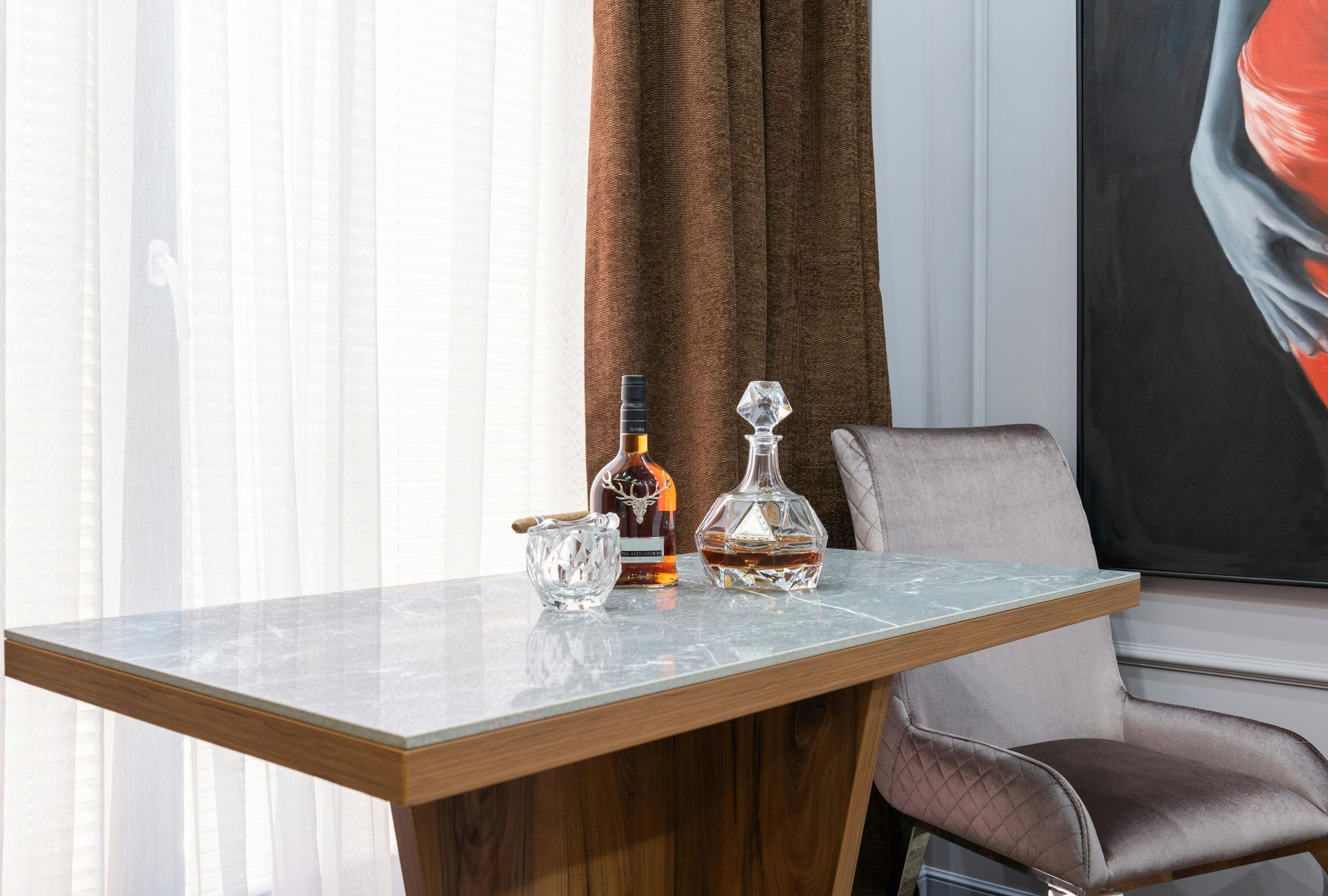
After the final coat cures and gets wet-sanded level, tables handle moisture exposure that would raise grain in unsealed wood, resist scratches from utensils and serving pieces, and maintain clarity rather than developing the cloudy haze that appears in worn varnish. Hot plates no longer leave white rings, spilled wine wipes away without staining, and the surface feels glass-smooth under your hand instead of showing texture from wood pores.
Epoxy coatings enhance wood appearance but cannot reverse existing damage—watermarks already absorbed into wood fibers remain visible beneath clear coatings, and cracks in underlying material telegraph through as visual lines even after filling. The coating creates a new surface plane above the wood rather than penetrating and reinforcing the cellular structure itself.
Common Questions About This Service
Clients typically want to understand how epoxy performs compared to traditional furniture finishes before committing to the application process.
What distinguishes bar top epoxy from standard tabletop formulations?
Bar top systems cure to greater hardness and build thicker in fewer coats, prioritizing impact resistance and liquid impermeability over the slight flexibility that dining table coatings retain. The harder cure makes bar tops more scratch-resistant but also more prone to showing surface damage as permanent marks rather than elastic deformation.
How does epoxy thickness affect finished appearance and durability?
Thicker applications provide more impact cushioning and create deeper optical effects that enhance wood figure, but require longer cure times and more careful temperature control to prevent heat-related defects. Most tabletops perform well with 1/8-inch build, while river tables filling large voids may need 1/4-inch depth in sections.
When does wood need additional preparation beyond standard sanding in Rosedale projects?
Oily exotic woods require solvent washing to remove natural oils that prevent epoxy adhesion, spalted or punky wood needs stabilization with thin penetrating sealers before epoxy application, and previously finished pieces must be stripped to bare wood since epoxy bonds mechanically rather than adhering to existing film finishes.
Why do some epoxy finishes yellow while others stay water-clear?
All epoxy ambers slightly with age, but UV exposure accelerates this significantly—tables near windows degrade faster than those in interior spaces. UV-inhibited formulations slow but don't eliminate yellowing, making wood species selection important since warm-toned woods disguise amber shift better than blonde species.
What maintenance does epoxy furniture require compared to traditional finishes?
Daily cleaning involves only damp cloth wiping since the non-porous surface prevents absorption, and no periodic refinishing is needed since epoxy doesn't wear through to bare wood like film finishes. Surface scratches can be wet-sanded and rebuffed without complete refinishing, though deep gouges require professional repair to maintain optical clarity.
Fancy Finishes Epoxy Floors matches coating specifications to your furniture's intended use and environment. Schedule a detailed consultation to review wood condition and select appropriate epoxy systems for your specific application.